



Beijing Inbound Tourism Summit 2026 Launches June 1, Attracting 300+ Global Travel Buyers
The Beijing Inbound Tourism Development Summit 2026—scheduled for June 1–6, 2026—marks a strategic step in aligning China’s cultural tourism supply chain with international procurement standards and service expectations. Its timing and structured matchmaking mechanism directly influence how overseas buyers assess service readiness, compliance transparency, and operational scalability across China’s inbound tourism ecosystem.
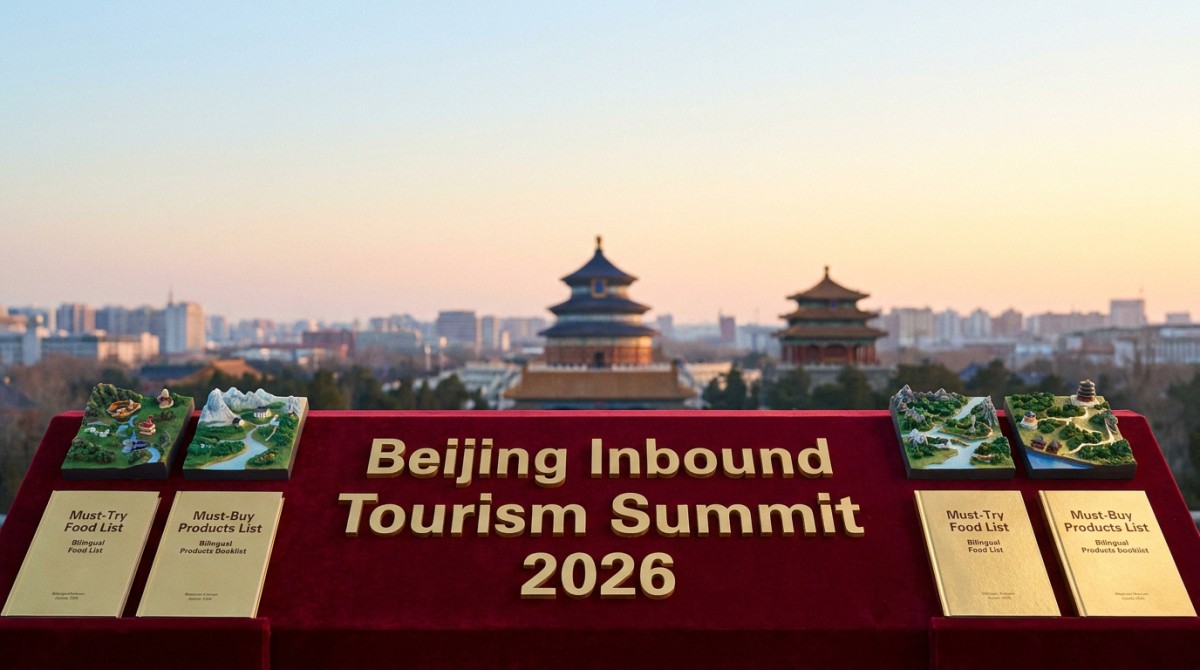
Event Overview: Structured Engagement for Global Market Access
Co-organized by the Beijing Municipal Bureau of Culture and Tourism and the International Exchange and Cooperation Bureau of the Ministry of Culture and Tourism, the summit convened over 300 leading inbound travel operators from more than 40 countries between June 1 and June 6, 2026. A dedicated digital appointment platform facilitated over 3,000 precise B2B matchings. The summit also unveiled three key market-facing tools: a ‘Must-Try Food List’, a ‘Must-Buy Products List’, and eight immersive familiarization routes designed to showcase destination capabilities on-the-ground.
Supply Chain Impact Across Key Operator Roles
Direct Tourism Exporters
These enterprises—offering end-to-end inbound packages, multilingual guided tours, or visa-assisted group services—face heightened expectations for standardized documentation, real-time capacity visibility, and verifiable service certifications. The summit’s emphasis on pre-validated routes and curated lists signals a shift toward outcome-based procurement, where performance evidence (e.g., guest satisfaction metrics, digital engagement rates) may increasingly supplement traditional credentials.
Local Experience Providers & Ground Operators
Regional tour operators, boutique accommodation providers, and activity vendors must now align their offerings with internationally benchmarked quality thresholds—including accessibility features, multilingual digital interfaces, and integrated payment solutions. The ‘immersive familiarization routes’ serve as de facto service blueprints; alignment with these pathways is becoming an implicit qualification for inclusion in buyer shortlists.
Tourism Technology Solution Providers
Firms delivering booking engines, AI-powered translation tools, real-time itinerary optimization platforms, or contactless experience systems are gaining priority access through the summit’s tech-integration focus. Buyers explicitly sought interoperable, GDPR-compliant, and WeChat/Alipay-agnostic solutions—indicating that data governance frameworks and cross-platform compatibility are now core technical bid requirements.
Destination Marketing & Certification Support Services
Organizations offering third-party verification (e.g., sustainability certification, safety audits, language proficiency validation), multilingual content localization, or regulatory compliance advisory services are seeing increased demand. The summit’s structured matchmaking highlighted gaps in standardized, internationally recognized attestations—especially for niche experiences such as culinary heritage tours or intangible cultural heritage workshops.
Strategic Priorities for Market-Ready Enterprises
Prepare for Service-Level Certification Alignment
With buyers relying on curated lists and vetted routes, enterprises should proactively validate their offerings against emerging benchmarks—not only for food safety or hotel star ratings, but also for experiential consistency, inclusive design, and post-trip feedback integration. Third-party verification aligned with ISO 20121 (event sustainability) or UNWTO guidelines is gaining traction.
Optimize Digital Matchmaking Readiness
Participation in future editions requires up-to-date profiles on the official appointment platform—including verified capacity calendars, multilingual service menus, live inventory feeds, and demonstrable integration with global distribution systems (GDS). Technical documentation must clearly specify API protocols, data retention policies, and incident response SLAs.
Strengthen Local-Global Content Bridging
Marketing assets—including route descriptions, vendor bios, and product videos—must be professionally localized beyond translation: culturally contextualized, visually optimized for mobile-first consumption, and compliant with regional data privacy norms (e.g., GDPR, PIPL). Buyers reported declining trust in machine-translated or template-based materials during initial screenings.
Anticipate Dynamic Procurement Cycles
The summit’s six-day format reflects a growing preference for accelerated decision timelines. Suppliers should adjust internal workflows to support rapid response to RFPs, flexible minimum order quantities (MOQs) for pilot groups, and modular pricing structures tied to measurable KPIs (e.g., NPS uplift, repeat booking rate).
Industry Observation: From Transactional Matching to Ecosystem Validation
Analysis shows this summit represents more than a trade fair—it functions as an informal standard-setting forum. The ‘Must-Try’ and ‘Must-Buy’ lists, though non-regulatory, are rapidly evolving into de facto market gateways. Observably, buyers are using them not just for discovery, but as reference frameworks during due diligence—cross-checking supplier claims against list criteria. It is more appropriate to understand this as an emergent layer of soft compliance: while no law mandates inclusion, exclusion increasingly implies non-readiness for scalable international partnership. What deserves closer attention is how local authorities may formalize elements of these lists into municipal service guidelines or incentive eligibility criteria in coming quarters.
Conclusion: A Catalyst for Systemic Supply Chain Maturation
The 2026 summit does not introduce binding regulation—but it crystallizes market-driven expectations that are reshaping procurement behavior, investment priorities, and capability development across China’s inbound tourism value chain. Its enduring significance lies not in policy enforcement, but in accelerating convergence between domestic service delivery and globally accepted benchmarks for reliability, transparency, and guest-centricity.
Source Attribution & Verification Guidance
This article synthesizes information provided in the user-specified title, event date (June 1, 2026), and summary. Specific official source links were not provided in the input and should be verified continuously. Stakeholders are advised to monitor updates from the Beijing Municipal Bureau of Culture and Tourism, the Ministry of Culture and Tourism’s International Exchange and Cooperation Bureau, and official summit communications for forthcoming implementation details, qualification criteria for future editions, and potential integration of summit-generated frameworks into municipal tourism development plans.
您的1:1旅行顾问将在1个工作日内回复
如何计划行程
按月旅行指南
热门目的地
为什么选择我们

高性价比与透明体验
提供令人惊讶的低价,且不存在可选的旅游陷阱,既能让游客以低成本出行,又能避免不必要的消费套路,保障消费透明性。

个性化与专属服务
支持 100% 免费定制,搭配一对一专家服务,能根据游客的具体需求打造专属行程,同时提供专业指导,提升旅行的个性化和专业性。

优质行程规划
行程紧凑且内容丰富,能让游客在有限时间内体验更多内容;同时精选位置优越的酒店,为游客提供便利的住宿条件,整体提升旅行的舒适度和体验感。